
You are using an out of date browser. It may not display this or other websites correctly.
You should upgrade or use an alternative browser.
You should upgrade or use an alternative browser.
4mm Ruyton Road revival
- Thread starter paulhb
- Start date

Joe's Garage
Western Thunderer
The Terriers are very attractive little engines aren't they?
All the best
Julian
All the best
Julian

paulhb
Western Thunderer
So with Hecate reduced to constituent parts ready for painting on with the next project. Pyramus was one of three Adams rebuilt Ilfracombe Goods which arrived on the Shropshire and Montgomeryshire from the LSWR in 1915, a Branchlines kit which is generally whitemetal with a nice etched chassis. Progress will be somewhat leisurely with no doubt diversions along the way but a start has been made with the tender. One immediate issue was that the tender body and chassis are integral in that the chassis can’t be separated from the body. I there searched and found some suitable frame spacers so that I could build a separate chassis. I’m also going down the continuous springy beam route which should be interesting!


Regards. Paul
Regards. Paul
John Bruce
Western Thunderer
I have one of these to build myself and hadn't appreciated the tender/chassis one piece construction, I shall hopefully learn from what you do.
Good luck.
John Bruce.
Good luck.
John Bruce.
This is a really lovely layout.
I am reluctant to venture anything that looks like a criticism, but there is one feature that jars every time I look at it: the bright red flowers.
The thing is, there are almost no native British plants with bright red flowers. Red flowers are associated with bird pollination (especially hummingbirds in the Americas) because birds have good vision in the red part of the spectrum. Bees can’t see red at all. On the other hand, bees can see UV. So British plants relying on bees generally have yellow/blue/purple flowers. Poppies are an obvious exception but although red have UV reflecting petals. Poppies though are weeds of newly disturbed ground so wouldn’t be found in the sort of locations where your red flowers are.
Please feel free to ignore the above!
Martin
I am reluctant to venture anything that looks like a criticism, but there is one feature that jars every time I look at it: the bright red flowers.
The thing is, there are almost no native British plants with bright red flowers. Red flowers are associated with bird pollination (especially hummingbirds in the Americas) because birds have good vision in the red part of the spectrum. Bees can’t see red at all. On the other hand, bees can see UV. So British plants relying on bees generally have yellow/blue/purple flowers. Poppies are an obvious exception but although red have UV reflecting petals. Poppies though are weeds of newly disturbed ground so wouldn’t be found in the sort of locations where your red flowers are.
Please feel free to ignore the above!
Martin

D602bulldog
Active Member
Theres a few red flowers that could grow at the side of the track if the driver threw some seeds out the windowThis is a really lovely layout.
I am reluctant to venture anything that looks like a criticism, but there is one feature that jars every time I look at it: the bright red flowers.
The thing is, there are almost no native British plants with bright red flowers. Red flowers are associated with bird pollination (especially hummingbirds in the Americas) because birds have good vision in the red part of the spectrum. Bees can’t see red at all. On the other hand, bees can see UV. So British plants relying on bees generally have yellow/blue/purple flowers. Poppies are an obvious exception but although red have UV reflecting petals. Poppies though are weeds of newly disturbed ground so wouldn’t be found in the sort of locations where your red flowers are.
Please feel free to ignore the above!
Martin
Attachments
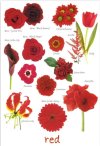
paulhb
Western Thunderer
This is a really lovely layout.
I am reluctant to venture anything that looks like a criticism, but there is one feature that jars every time I look at it: the bright red flowers.
The thing is, there are almost no native British plants with bright red flowers. Red flowers are associated with bird pollination (especially hummingbirds in the Americas) because birds have good vision in the red part of the spectrum. Bees can’t see red at all. On the other hand, bees can see UV. So British plants relying on bees generally have yellow/blue/purple flowers. Poppies are an obvious exception but although red have UV reflecting petals. Poppies though are weeds of newly disturbed ground so wouldn’t be found in the sort of locations where your red flowers are.
Please feel free to ignore the above!
Martin
I largely agree with you about the red flowers and one of my first thoughts after planting them was …..nah not sure about this. Poppies tend to thrive on fairly poor soil that may have been disturbed but you do often see them on grass verges in some areas. To be honest the ones on Ruyton don’t even really look like poppies close up so I bring my 3 foot rule into play, ie can you tell from that distance…perhaps! Anyway at some stage I’ll find my ‘roundtoit’ and do something about it.
Regards Paul

Flaxfield
Western Thunderer
There are more red wind flowers in Britain. Granted, some are at the pink end of the red spectrum but they are red flowers.....
Red Campion (Silene dioica): A common, hairy perennial found in woodlands and hedgerows, featuring deep pink-red, five-petaled flowers.
Red Clover (Trifolium pratense): A familiar, low-growing plant with distinct red-purple flower heads, commonly found in grasslands.
Common Poppy (Papaver rhoeas): An iconic, bright red, annual flower that thrives in disturbed soil and cornfields.
Ragged Robin (Silene flos-cuculi): Known for its ragged, pink-red petals, this plant prefers damp meadows and roadside verges.
Red Valerian (Centranthus ruber): A hardy, clump-forming plant with clusters of small red, pink, or white flowers often found on walls and banks.
Herb-Robert (Geranium robertianum): A small, trailing geranium with pinkish-red flowers and distinctive red-tinged leaves.
Betony (Stachys officinalis): A wildflower with spiked, purplish-red flowers that is attractive to bees.
Lords-and-Ladies (Arum maculatum): Produces a spike of bright red berries in late summer, which are highly visible in woodlands.
And if all that doesn't convince..........there's always rule 1
Rob
Red Campion (Silene dioica): A common, hairy perennial found in woodlands and hedgerows, featuring deep pink-red, five-petaled flowers.
Red Clover (Trifolium pratense): A familiar, low-growing plant with distinct red-purple flower heads, commonly found in grasslands.
Common Poppy (Papaver rhoeas): An iconic, bright red, annual flower that thrives in disturbed soil and cornfields.
Ragged Robin (Silene flos-cuculi): Known for its ragged, pink-red petals, this plant prefers damp meadows and roadside verges.
Red Valerian (Centranthus ruber): A hardy, clump-forming plant with clusters of small red, pink, or white flowers often found on walls and banks.
Herb-Robert (Geranium robertianum): A small, trailing geranium with pinkish-red flowers and distinctive red-tinged leaves.
Betony (Stachys officinalis): A wildflower with spiked, purplish-red flowers that is attractive to bees.
Lords-and-Ladies (Arum maculatum): Produces a spike of bright red berries in late summer, which are highly visible in woodlands.
And if all that doesn't convince..........there's always rule 1
Rob
John Bruce
Western Thunderer
The word "comprehensive" comes to mind, thank you Rob.
Long live Rule 1.
John Bruce.
Long live Rule 1.
John Bruce.
We don’t need to get into a detailed discussion here!There are more red wind flowers in Britain. Granted, some are at the pink end of the red spectrum but they are red flowers.....
Red Campion (Silene dioica): A common, hairy perennial found in woodlands and hedgerows, featuring deep pink-red, five-petaled flowers.
Red Clover (Trifolium pratense): A familiar, low-growing plant with distinct red-purple flower heads, commonly found in grasslands.
Common Poppy (Papaver rhoeas): An iconic, bright red, annual flower that thrives in disturbed soil and cornfields.
Ragged Robin (Silene flos-cuculi): Known for its ragged, pink-red petals, this plant prefers damp meadows and roadside verges.
Red Valerian (Centranthus ruber): A hardy, clump-forming plant with clusters of small red, pink, or white flowers often found on walls and banks.
Herb-Robert (Geranium robertianum): A small, trailing geranium with pinkish-red flowers and distinctive red-tinged leaves.
Betony (Stachys officinalis): A wildflower with spiked, purplish-red flowers that is attractive to bees.
Lords-and-Ladies (Arum maculatum): Produces a spike of bright red berries in late summer, which are highly visible in woodlands.
And if all that doesn't convince..........there's always rule 1
Rob
Of the list above, red campion, red clover, ragged robin, herb robert and betony are all pink or purple(ish), not true scarlet red.
Red valerian is not a native species but a naturalised alien. It’s closer to bright red than those listed above and could be found on waste ground round a railway in the southern part of Britain. It’s not hardy further north.
Poppies are true, bright red — to us. The petals reflect UV, so they appear ultra violet to bees. As you say, ecologically they are arable weeds found on newly disturbed ground. Hence they flourished in no man’s land between the trenches in WW1.
The red berries of arum are brilliant red. As are the red fruits of hawthorn, spindle tree, strawberry, raspberry and many others. Whilst these plants aren’t pollinated by birds, the seeds are eaten and dispersed by birds. So red fruits ‘make sense’ as being highly visible to the dispersal agent.
I did a lot of botanical survey work in my professional career. True, bright red flowers are not usual in most habitats in Britain. White, yellow, pink, purple and blue are the predominant colours.
Martin


